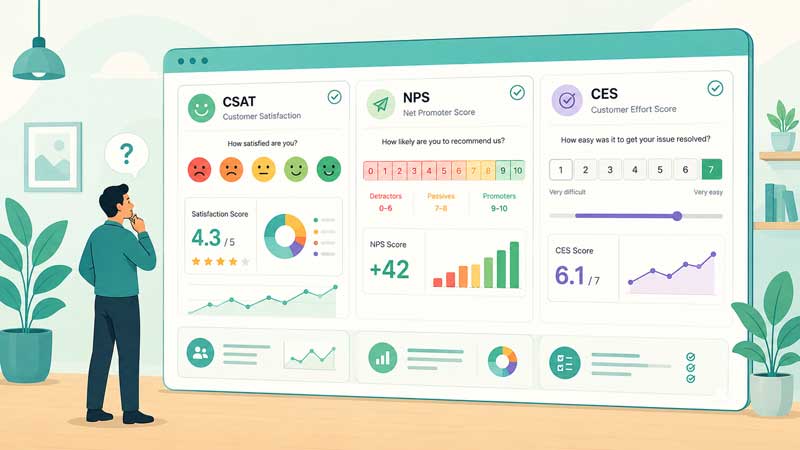
If you work with survey data, you already know that open-ended responses can be some of the most valuable parts of a study. They give people room to explain their thinking in their own words, add nuance to ratings, and raise issues you may not have anticipated when designing the questionnaire. In many cases, the richest insights do not come from the scale question alone, but from the explanation that follows it. That is where respondents reveal what frustrated them, what they appreciated, what confused them, and what they believe should change.
At the same time, open-text data is one of the hardest forms of feedback to analyze well. A few comments are easy to read manually. A few hundred can already become difficult to code consistently. A few thousand can overwhelm even an experienced research team if the process is entirely manual. This is one reason AI has become such an attractive tool in survey analysis. It promises speed, structure, and scalability. But if you use it carelessly, it can also lead to oversimplified findings, shallow categorization, and conclusions that sound efficient without being methodologically strong. The real opportunity is not to let AI replace research rigor. It is to use AI in a way that strengthens and supports it.
Why Open-Ended Responses Are So Valuable
Open-ended responses matter because they capture things structured questions often miss. A closed-ended item can tell you that satisfaction is low, but it may not tell you why. A rating can show that people found a process difficult, but it may not reveal what part of the process created the difficulty. When respondents write in their own words, you gain access to explanation, emotion, emphasis, and unexpected themes. You also hear the language people naturally use to describe their experience, which can be extremely useful for interpretation, reporting, and future questionnaire design.
This kind of feedback is especially valuable when you want depth rather than just measurement. If you are studying customer experience, employee sentiment, patient perception, product usability, or service quality, the written responses often show you what matters most to people beyond the numeric average. They can expose contradictions, clarify priorities, and uncover patterns you did not include in your original hypothesis. In that sense, open-ended responses are not simply “extra comments.” They are often where interpretation becomes more complete and more human.
Why Manual Analysis Becomes Difficult
The challenge is that valuable data is not automatically easy data. Open-ended responses require interpretation, and interpretation takes time. A researcher has to read through responses carefully, identify recurring themes, distinguish major issues from isolated remarks, decide how to code each answer, and then summarize the results in a way that remains faithful to what respondents actually meant. This becomes harder as volume grows. The issue is not only the number of comments, but the variability within them. Some responses are short and direct. Others are long, emotional, ambiguous, or cover several points at once.
Manual analysis also introduces consistency challenges. If you are coding responses over a long period, or if multiple people are involved, differences in judgment can affect how themes are defined and applied. Two researchers may interpret the same answer differently. Even one researcher may become less consistent over time as fatigue sets in. This does not mean manual analysis is weak. In many cases, it is still essential. But it does mean that manual coding alone can become slow, expensive, and difficult to scale, especially when your organization needs timely findings.
Where AI Can Genuinely Help
AI can be genuinely useful because it helps you process large volumes of text more efficiently than a fully manual workflow. It can identify recurring terms, group similar comments, suggest themes, detect sentiment patterns, and summarize clusters of feedback. This can save a great deal of time in the early stages of analysis. Instead of reading thousands of responses with no structure, you can begin with an organized view of the data that highlights the main patterns worth investigating further.
This is especially helpful when you need to move from raw comments to an initial analytical framework. AI can quickly surface repeated complaints, recurring praise, or commonly mentioned points of confusion. It can also help you detect variations across segments, identify unusual comments, or reduce the time it takes to prepare a research summary. When used properly, this does not replace the analyst. It gives the analyst a stronger starting point. The value is in acceleration and organization, not in outsourcing judgment.
What AI Is Good At in Open-Text Analysis
AI performs well when the task involves scale, sorting, and pattern detection. If you have a large number of comments and want to understand the broad themes emerging from them, AI can help cluster similar responses and make those patterns visible faster than a human could do alone. It can also help with sentiment analysis by flagging whether comments appear broadly positive, negative, mixed, or neutral. In addition, it can generate summaries that make it easier to communicate the general shape of the data to stakeholders who need a quick overview before going deeper.
Another area where AI is helpful is in comparing open-text feedback across segments. You may want to know whether first-time customers mention different concerns than long-term customers, or whether one department is raising issues that another is not. AI can support this kind of comparison efficiently when the data is large and diverse. It can also help you flag representative phrases, recurring vocabulary, and emerging issues that may not have been built into your original coding structure. These are real analytical advantages when they are used carefully.
Where Researchers Still Need to Lead
Even when AI performs well, the researcher must remain in control of interpretation. AI can detect patterns, but it does not understand context in the way a thoughtful analyst does. It may group comments together that seem similar on the surface but actually reflect different underlying concerns. It may miss irony, overstate the importance of frequent phrases, or flatten subtle distinctions between related themes. It can also produce summaries that sound confident while hiding important exceptions or minority viewpoints.
This is why human leadership remains essential. You still need to decide what the themes actually mean, how they relate to your research objectives, and whether the categorization reflects the real substance of the responses. You also need to evaluate whether an AI-generated theme is analytically useful or merely convenient. Rigor comes from methodological judgment, not from speed alone. AI can help you move faster, but only you can decide whether the result is accurate, meaningful, and fit for decision-making.
How to Use AI Without Compromising Rigor
If you want to use AI well, you should begin with a simple principle: never separate the analysis too far from the original text. AI-generated summaries and themes can be useful, but they should always be traceable back to actual responses. You need to be able to review the comments underneath a theme, examine whether they truly belong there, and understand what the summary may be omitting. This is one of the most important safeguards against shallow interpretation.
You should also treat AI output as a draft, not a final answer. Let it propose themes, clusters, and summaries, but then review them critically. Check whether labels are too broad, whether distinct issues have been merged, or whether important nuance has been lost. Look at edge cases. Review responses that do not fit neatly. Pay special attention to smaller themes that may matter strategically even if they are less frequent. Rigor does not mean rejecting AI. It means refusing to treat automation as proof.
A Practical Workflow for AI-Assisted Text Analysis
A strong workflow usually begins with preparing the data properly. You first collect and clean the responses, removing duplicates, correcting obvious structural issues if necessary, and ensuring the text is ready for analysis. Then you use AI to generate an initial thematic structure. This may include suggested categories, grouped comments, sentiment patterns, or short summaries of recurring issues. At this point, the aim is not to publish findings. The aim is to create an informed first pass.
Next, you review and refine the output manually. You examine the proposed themes, test whether the grouped comments truly belong together, rename categories where needed, split themes that are too broad, and merge ones that are genuinely overlapping. You then compare those findings with the rest of your survey data. If respondents gave low ratings in one area and the open-text responses explain why, that strengthens interpretation. If the text appears to contradict the numeric trends, that also deserves closer attention. Finally, when you report the findings, you do not rely only on AI summaries. You present themes with evidence, explanation, and, where appropriate, illustrative quotations. This is how you combine efficiency with analytical credibility.
Why Validation Matters
Validation is the point where many weak AI workflows fail. A theme is not trustworthy just because an AI system grouped comments under a convincing label. You need to verify that the grouping reflects the actual content. That means reading samples from each category, checking borderline cases, and making sure the interpretation holds up when you look closely. Without this step, you risk reporting findings that are neat but misleading.
Validation also matters because some of the most important insights are not the most frequent ones. A purely automated process may prioritize repetition and overlook significance. But in research, a less common theme can still be strategically important if it reveals a major risk, a serious usability problem, or a concern from a high-value segment. Human review helps you distinguish between frequency and importance. That is a critical part of rigorous analysis.
Common Risks and Limitations
AI can make open-text analysis faster, but it also introduces risks that you need to manage carefully. One risk is oversimplification. When responses are compressed too aggressively into a few broad themes, you may lose the nuance that made the qualitative data valuable in the first place. Another risk is false confidence. Because AI-generated summaries often sound polished, stakeholders may assume they are more precise than they really are. That can create a dangerous gap between how findings are presented and how well they have actually been verified.
There is also the risk of misclassification. A comment that contains mixed sentiment, layered meaning, or unusual wording may be placed under the wrong theme. Minority opinions may be overlooked if they do not appear often enough to dominate the data. Context can also be lost when short summaries are used without checking the underlying comments. These limitations do not make AI unusable. They simply mean you need a disciplined process that treats AI as a tool within research, not as a substitute for research.
How to Combine AI Findings with Traditional Survey Analysis
Open-text analysis becomes even more valuable when you connect it with the rest of your survey data. If a rating scale shows dissatisfaction in a particular area, the written responses can help explain the source of that dissatisfaction. If one customer segment gives a lower score than another, their comments can show what is driving the difference. This is where survey analysis becomes more than description. It becomes interpretation grounded in multiple forms of evidence.
You should not think of AI text analysis as something separate from quantitative work. The strongest approach is to integrate them. Use the structured data to show where patterns exist, and use the text to explain what those patterns mean. This combination is especially powerful when reporting to decision-makers. Numbers help you show the scale of an issue. Written responses help you show its substance. Together, they create findings that are much easier to act on.
What a Good AI-Supported Report Should Include
A good report should do more than list themes generated by AI. It should explain what the themes mean, how strong they are, what kinds of respondents are associated with them, and how they connect to the broader research objective. It should also include evidence. That may be in the form of selected quotations, paraphrased examples, or references to the kinds of responses that support each conclusion. The goal is to make the analysis transparent enough that readers can trust it.
It is also important to show nuance. A solid report does not pretend that every respondent said the same thing. It acknowledges contradictions, mixed opinions, and less common but important viewpoints. It explains where AI helped speed up the work, but it does not hide the role of human validation and interpretation. When you report this way, you make the output not only more credible, but also more useful for real decision-making.
Conclusion
AI can make open-ended survey analysis faster, more scalable, and more organized. That is a real advantage, especially when you are working with large volumes of feedback and need timely insight. But the real value of AI does not come from replacing the researcher. It comes from helping you do rigorous work more efficiently. If you let AI handle the sorting while you continue to lead the interpretation, validation, and reporting, you get the best of both worlds.
You do not need to choose between speed and rigor. You need a workflow that respects both. When you use AI to support, rather than shortcut, the analytical process, you can turn open-text survey responses into findings that are both practical and methodologically sound.