When you deliver a training session, your work does not end when the final slide is shown, the last question is answered, or the participants leave the room.
In many ways, that is where the real value of your work begins.
After every training, people want to know whether it was useful. Your client wants to know if the training achieved its purpose. Your manager wants to know if the investment was worth it. Your participants want to feel that their time was respected. And you, as the trainer, need to know whether the session worked, what can be improved, and how you can prove the value of what you delivered.
This is where many trainers struggle.
You may already collect feedback after your training sessions. You may send a form. You may ask participants to rate the session. You may export results into a spreadsheet. You may even create a short summary for your client. But the question is this:
Can your feedback report actually prove anything?
A simple feedback form tells you what people said. A verified training report gives you something stronger. It gives you structured, credible, shareable evidence of your training performance.
That is why every serious trainer needs a verified training report.
Training feedback is no longer enough on its own
For a long time, training feedback was treated as a simple afterthought. At the end of a session, participants filled in a form, gave a score, wrote a few comments, and moved on. The trainer might read the results later, pick a few nice comments, and send a short summary to the client.
That was acceptable when training evaluation was informal.
But today, expectations are different.
If you deliver training for companies, schools, government bodies, healthcare organisations, HR departments, or professional teams, people want proof. They want evidence that the training was relevant. They want to know whether participants understood the content. They want to see whether the trainer was effective. They want to know whether the training was worth repeating, improving, or investing in again.
In other words, your clients are not only buying your time. They are buying an outcome.
That outcome needs to be visible.
When you only provide ordinary feedback results, your client may still have doubts. They may wonder whether the report was edited. They may question whether the comments were selected carefully to make the training look better. They may ask whether the numbers represent the full group or only a few happy participants.
This is why verified training reports matter.
A verified training report gives your training feedback more weight. It moves your evaluation from “here is what I say happened” to “here is what the participants actually reported.”
That difference can change how clients see your work.
What is a verified training report?
A verified training report is a structured report generated from real training feedback collected through a controlled feedback process.
In Enquete.com, this means that participant responses are collected through the platform and then used to generate a clear, branded report that summarises the performance of a training session or training programme. Instead of manually copying results from one tool into another document, you can use Enquete Trainer Suite to collect, organise, and present training feedback in a professional way.
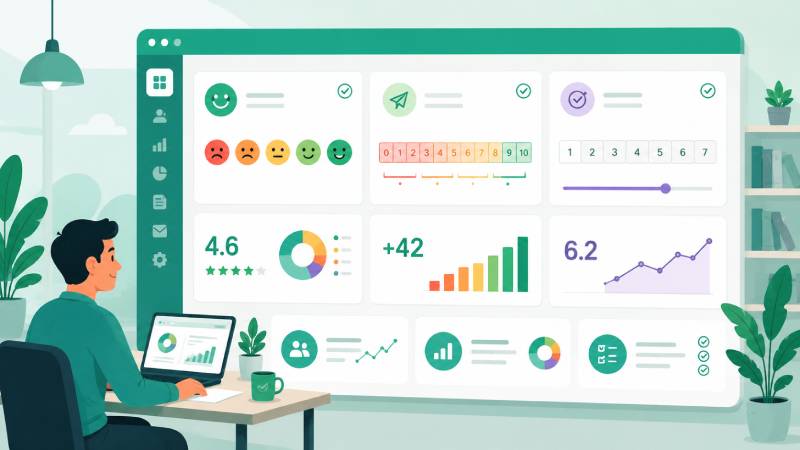
A verified report can help show important details such as participant satisfaction, ratings, comments, training performance, and overall feedback trends. It can also be shared as a branded PDF or public report URL, making it easier for your client or stakeholder to view the results directly.
The word “verified” is important because it changes the perception of the report.
When you create a report manually, people may see it as your own interpretation of the training. But when the report is generated from collected responses, it becomes more credible. It feels more independent. It gives your client a stronger reason to trust the outcome.
As a trainer, that matters because your reputation depends not only on what you deliver, but also on how clearly you can prove the value of what you delivered.
Why you need proof, not just positive comments
Positive comments are useful. They make you feel encouraged, and they can help you understand what participants appreciated. But comments alone are not enough to prove training impact.
A few nice quotes can support your story, but they do not always give the full picture.
Imagine that you deliver a leadership training session to 30 participants. After the session, three people send you positive comments. That is good, but what about the other 27 participants? Did they also find the training useful? Did they understand the content? Did they feel more confident after the session? Did they think the training was relevant to their work?
A verified training report helps answer those questions more clearly.
It gives you a broader view of the session. It allows you to show ratings, trends, response patterns, and participant feedback in a structured format. Instead of relying only on selected comments, you can present the full evaluation in a way that feels more objective.
This is important because serious clients care about evidence.
If a company hires you to train its staff, they may need to justify the cost internally. If an HR manager books your training, they may need to show leadership that the programme delivered value. If a school, healthcare organisation, or public institution works with you, they may need documented feedback for quality assurance.
Your verified training report helps them do that.
You are not only helping yourself. You are also helping your client defend the decision to hire you.
That makes you more valuable.
The problem with manual training reports
Many trainers still handle training feedback manually. You may recognise this process.
You create a survey in one tool. You send the link to participants. You wait for responses. You export the results into Excel. You clean up the data. You copy charts into PowerPoint or Word. You select a few comments. You write a short summary. You format the document. You send it to the client.
At first, this may not seem like a big problem. But when you deliver training regularly, it becomes a serious burden.
Manual reporting takes time. It is easy to make mistakes. It is difficult to keep reports consistent. It also becomes harder to compare results across multiple sessions because every report may be slightly different.
The bigger problem is credibility.
When you manually prepare a report, your client may not know what happened between the raw feedback and the final document. They may not know whether all responses were included. They may not know whether the charts were edited. They may not know whether negative comments were removed.
Even if you are completely honest, the report still depends on trust.
A verified training report reduces that problem.
Because the report is generated from feedback collected inside the platform, it feels more transparent and reliable. You are not just saying, “Here is my summary.” You are giving your client a structured report based on the actual responses.
That gives your work a more professional standard.
Why recurring training needs a better feedback system
If you only deliver one training session once a year, a simple feedback form may feel manageable. But if you run recurring training, the problem becomes bigger.
Recurring training needs structure.
You may deliver the same course every month. You may run onboarding sessions for new employees. You may provide leadership training to different teams. You may teach compliance training to multiple departments. You may deliver customer service workshops to several client groups.
In each case, the training is not a one-time event. It is a programme that repeats.
This is where many ordinary survey tools become limiting.
They treat every survey as a separate project. That means every session can become disconnected from the larger training programme. You end up with separate links, separate results, separate exports, and separate reports. Over time, it becomes difficult to see whether your training is improving.
Enquete Trainer Suite solves this by recognising the difference between a training and a session.
A training is the course or programme you deliver repeatedly. A session is one specific delivery of that training.
That distinction may sound simple, but it is powerful.
When your feedback is organised around trainings and sessions, you can manage recurring evaluation more clearly. You do not have to rebuild the same feedback process every time. You can collect session-level feedback while still keeping everything connected to the larger training programme.
This helps you see more than one isolated result.
You can begin to understand performance over time.
How Enquete Trainer Suite helps you work more professionally
Enquete Trainer Suite is built for trainers, training companies, HR teams, L&D teams, schools, coaches, onboarding teams, and organisations that run training repeatedly.
Instead of forcing you to manage training feedback as a collection of disconnected surveys, it gives you a dedicated workflow for training evaluation.
You can create a training, connect feedback to that training, manage sessions, collect responses, and generate reports that show how the training performed. This makes your evaluation process more organised from the beginning.
The benefit is not only that you save time. The bigger benefit is that your work looks more professional.
When you present a verified report after a training session, you show your client that you take evaluation seriously. You are not just delivering content and disappearing. You are measuring the experience, documenting the result, and giving the client something they can use.
That sends a strong message.
It tells your client that you are not only a trainer. You are a professional who understands quality, accountability, and measurable improvement.
In a competitive training market, that can make a real difference.
A verified report helps you build trust with clients
Trust is one of the most valuable assets you have as a trainer.
A client may enjoy your session, but if they are going to hire you again, recommend you to others, or expand your programme, they need confidence. They need to feel that your training delivers value beyond a good presentation.
A verified training report helps build that confidence.
When you share a report with a client, you are giving them a clear view of the participant experience. They can see how people responded. They can review scores. They can read comments. They can understand what worked and what needs improvement.
This level of transparency makes you easier to trust.
It also changes the tone of the conversation after the training.
Instead of saying, “I think the session went well,” you can say, “Here is the verified feedback from the participants.”
That is much stronger.
It makes your follow-up meeting more professional. It gives you something concrete to discuss. It helps you explain your value with evidence rather than opinion.
And when clients trust your reporting, they are more likely to trust your recommendations.
A verified report helps you win repeat business
Many trainers think of feedback as something that happens after the sale. But feedback can also help you create the next sale.
When you deliver a successful training session and generate a verified report, you now have a strong asset for future business conversations.
You can show the client that the session was well received. You can identify areas where participants want more support. You can recommend a follow-up training based on the feedback. You can demonstrate improvement across multiple sessions. You can use the results to justify expanding the programme.
This is where training feedback becomes more than evaluation.
It becomes a sales tool.
For example, imagine that participants in your leadership training report that they enjoyed the session but still want more practical exercises on conflict management. That feedback gives you a natural reason to propose a second training session focused on conflict resolution.
You are no longer guessing what to sell next.
You are using participant feedback to guide the next step.
A verified report gives this recommendation more authority because the need comes from the participants themselves. You are not pushing a service randomly. You are responding to documented feedback.
That is a much stronger commercial position.
A verified report helps you improve your training
A verified training report is not only for your client. It is also for you.
If you care about becoming better as a trainer, you need honest feedback. You need to know what people understood, what they found useful, what they struggled with, and where the session could be improved.
Without structured feedback, you may rely too much on your own impression.
You may think the session went well because people smiled and participated. But the report may show that some parts were unclear. You may think a certain exercise was useful, but the feedback may show that participants wanted more real-world examples. You may think the pacing was right, but the results may show that the session felt rushed.
This is not a problem. This is an opportunity.
Good trainers improve because they listen.
A verified report gives you the information you need to improve with confidence. It helps you identify patterns over time. If several sessions show the same weakness, you know where to focus. If scores improve after you change your material, you can see that your adjustments are working.
This makes your training development more intentional.
You are not improving based on guesswork. You are improving based on evidence.
A verified report makes you look more professional
Professionalism is not only about how you speak during a session. It is also about what happens before and after the session.
When you send a clean, branded, structured report after a training, you immediately create a stronger impression.
Your client sees that you have a process. They see that you measure quality. They see that you are organised. They see that you can provide documentation. They see that you care about outcomes, not just delivery.
This matters especially when you are competing with other trainers.
Many trainers can deliver a good session. Fewer trainers can prove the impact of that session in a professional way.
That gives you an advantage.
A verified training report can help you stand out because it shows that you operate at a higher standard. You are not just offering training. You are offering measurable training evaluation.
For clients, that is valuable.
For your brand, it is powerful.
A verified report gives HR and L&D teams what they need
If you work with HR or Learning and Development teams, verified reporting becomes even more important.
HR and L&D teams often need to report internally. They may need to show management how many employees attended training, how participants rated the session, what learning needs were identified, and whether the programme should continue.
If you can provide a verified report, you make their job easier.
Instead of forcing them to create their own internal summary, you give them a ready-made document they can share, reference, or use in their own reporting. This makes you a more helpful partner.
It also increases the chance that they will work with you again.
When you make your client’s job easier, you become more than a vendor. You become a reliable partner.
That is exactly the kind of relationship serious trainers should aim to build.
A verified report supports accountability
Training is an investment.
When an organisation pays for training, it is reasonable for them to ask what came out of it. A verified report supports accountability by giving everyone a clearer picture of the outcome.
This does not mean every training must receive perfect scores. In fact, a verified report is valuable even when the feedback is mixed.
Why?
Because honest feedback helps everyone improve.
If the training went very well, the report proves it. If some parts need improvement, the report shows where. If participants want a follow-up session, the report reveals that. If the training did not fully meet expectations, the report gives you a chance to respond professionally.
This kind of transparency can strengthen your reputation.
Clients do not expect perfection. But they do respect trainers who measure, learn, and improve.
A verified report shows that you are willing to be accountable for your work.
That is a mark of professionalism.
A verified report helps you move from “trainer” to “trusted expert”
If you want to grow as a trainer, you need more than good delivery skills. You need to position yourself as an expert.
Experts do not only deliver sessions. They diagnose problems, measure progress, interpret feedback, and recommend next steps.
A verified training report helps you do that.
After the session, you can use the report to guide a meaningful conversation with your client. You can explain what the feedback shows. You can identify strengths. You can highlight improvement areas. You can recommend follow-up actions. You can connect the results to the client’s goals.
This changes how the client sees you.
You are no longer just the person who came to deliver a workshop. You become the person who helps them understand learning outcomes and improve performance.
That is a much stronger position.
And it is exactly the kind of position that leads to long-term client relationships.
Who should use verified training reports?
If you deliver training in any professional setting, you can benefit from verified training reports.
If you are an independent trainer, they help you prove your value to clients and strengthen your personal brand. If you run a training company, they help you standardise reporting across multiple trainers and clients. If you work in HR or L&D, they help you measure internal programmes and justify training investments. If you are a coach, they help you collect structured feedback from workshops and group sessions. If you work in education, they help you evaluate courses, seminars, and learning experiences.
Verified reports are especially useful when training is repeated.
The more often you deliver the same programme, the more important it becomes to track performance over time. You need to know whether the training is improving, whether participants are satisfied, and whether the programme is still relevant.
A verified training report gives you that visibility.
Why this matters for your reputation
Your reputation as a trainer is built on results.
People may remember your personality, your slides, your exercises, and your examples. But clients are more likely to rehire you when they can see that your work created value.
A verified training report helps protect and grow that reputation.
It gives you evidence you can use in follow-up conversations. It gives clients confidence. It gives HR and L&D teams something to report. It gives you insights for improvement. It gives future clients a stronger reason to trust you.
Over time, this can become part of your professional identity.
You are not only a trainer who delivers sessions. You are a trainer who measures results, proves impact, and improves continuously.
That is the kind of trainer clients remember.
How Enquete Trainer Suite makes this easier
You should not have to fight with spreadsheets, disconnected forms, and manual reports every time you finish a training session.
Your time is better spent improving your content, supporting your participants, building client relationships, and preparing your next session.
Enquete Trainer Suite helps by giving you a structured way to manage training feedback. It is built around the reality of recurring training. It helps you collect feedback, organise responses, and generate reports that are easier to share and easier to trust.
The value is simple.
You save time.
You look more professional.
You prove your impact.
You help your client make better decisions.
You turn training feedback into a business advantage.
That is what makes verified training reports so powerful.
Conclusion
If you are serious about training, you should be serious about proof.
Feedback should not disappear into a spreadsheet. It should not remain as scattered comments in your inbox. It should not become a manual report that takes hours to prepare and still depends entirely on trust.
Your training deserves better.
A verified training report helps you show what participants experienced, how the session performed, and why your work matters. It gives your clients confidence. It helps you improve. It supports repeat business. It strengthens your professional reputation.
Most importantly, it helps you move from simply collecting feedback to proving training impact.
That is the difference between being a trainer who says the session went well and a trainer who can show it.
With Enquete Trainer Suite, you can make every training session measurable, credible, and easier to share.
Start using Enquete.com to collect verified training feedback, generate professional reports, and prove the impact of every training session.